










Introducing Contrast Enhanced Mammography (CEM) at Auckland Breast Centre
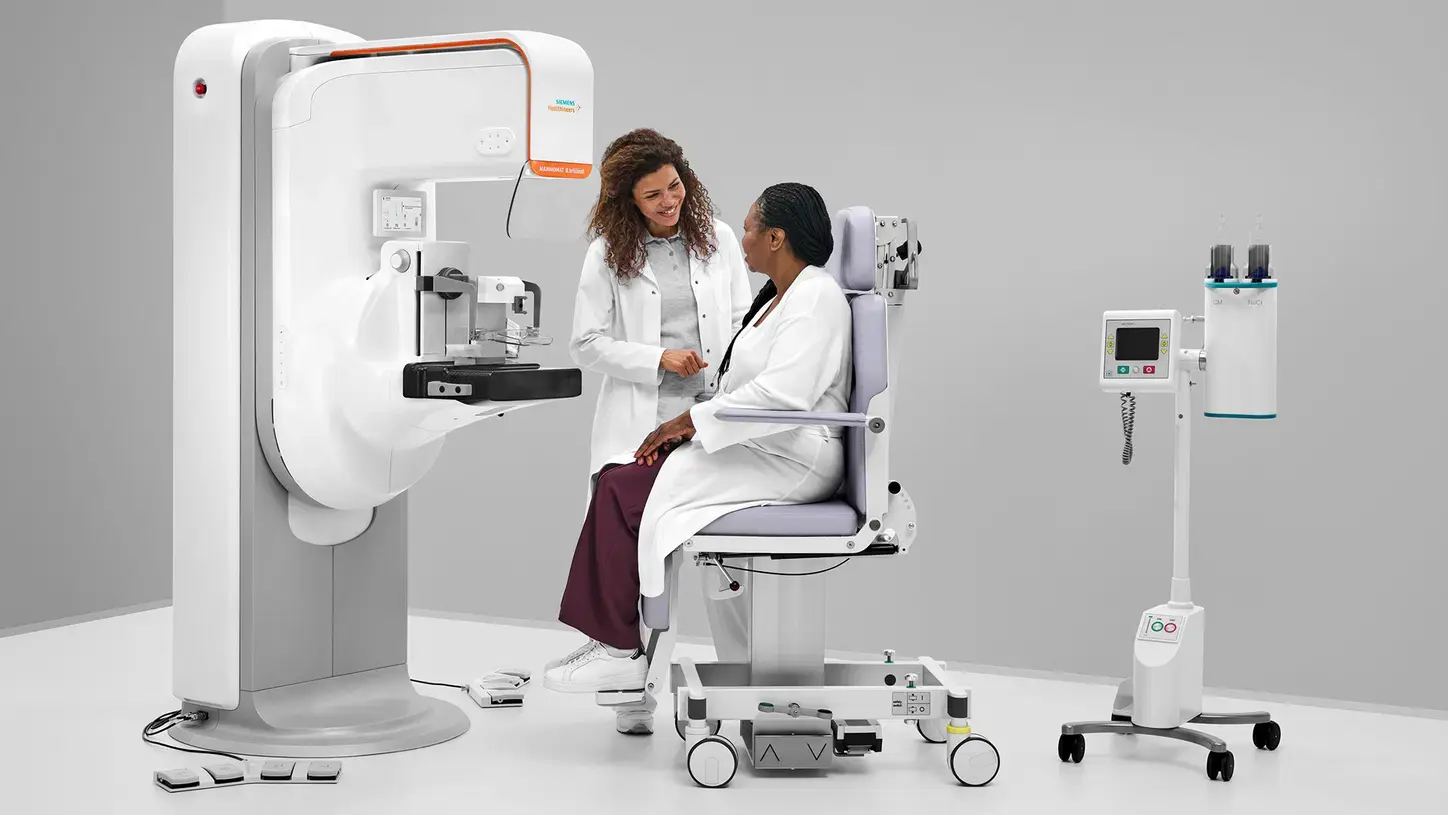
Auckland Breast Centre is pleased to introduce Contrast-Enhanced Mammography (CEM) to our Shakespeare Road Clinic. CEM is an advanced breast imaging technique that provides greater insight when more detailed assessment is needed.
What is Contrast-Enhanced Mammography (CEM)?
CEM is an advanced breast imaging technique that combines 3D Tomosynthesis with an intravenous (IV) iodine-based contrast dye. The contrast dye highlights areas of increased blood flow within the breast; a feature often associated with cancer. This allows radiologists to detect and assess abnormalities with greater accuracy, particularly in cases where a clearer picture is needed.
How does Contrast-Enhanced Mammography (CEM) work?
CEM uses a technique called dual-energy imaging to provide both structural and functional information in a single examination.
- A small amount of iodine-based contrast dye is injected into a vein in the patient’s arm
- Two sets of mammogram images are taken:
-
- A low-energy image, like a standard mammogram
- A high-energy image, which captures the contrast within the breast tissue
-
- These images are then combined using subtraction technology, which removes background breast tissue and highlights areas of contrast uptake
Because cancers often develop their own blood supply (a process known as angiogenesis), they tend to absorb more contrast — making them more visible on imaging.
Why Contrast-Enhanced Mammography (CEM) is an important advancement
CEM provides a more comprehensive view than standard imaging alone, helping to:
- Detect cancers that may be difficult to see on mammography, particularly in dense breast tissue
- Identify small or early-stage cancers with greater sensitivity
- Better distinguish between benign and suspicious findings
- Accurately assess the size and extent of disease
By combining anatomical and functional imaging, CEM supports more confident diagnosis and decision-making.
Who is suitable for Contrast-Enhanced Mammography (CEM)?
- For the first 5 years after the diagnosis of breast cancer
- Elevated risk:
-
- There is a genetic mutation
- Lifetime risk of breast cancer is above 20-25%
- History of chest radiation before the age of 30
- Strong family history
-
- Recommended after complex mammography and/or ultrasound findings
The introduction of Contrast-Enhanced Mammography at Auckland Breast Centre represents an important advancement breast imaging. CEM is not required for all patients, but it provides an important additional option when more detailed imaging is needed.
Is a Contrast-Enhanced Mammogram right for me?
The best way to determine whether a CEM is suitable for you is to speak with your GP or specialist, who can consider your medical history, symptoms, and imaging needs and advise on the most appropriate option for your situation.
Where can I get a Contrast-Enhanced Mammogram?
Contrast‑Enhanced Mammograms are available at Auckland Breast Centre. A referral from your GP or specialist is required. You can contact our team for more information, or book your appointment online here.